
Understanding Cable Chains
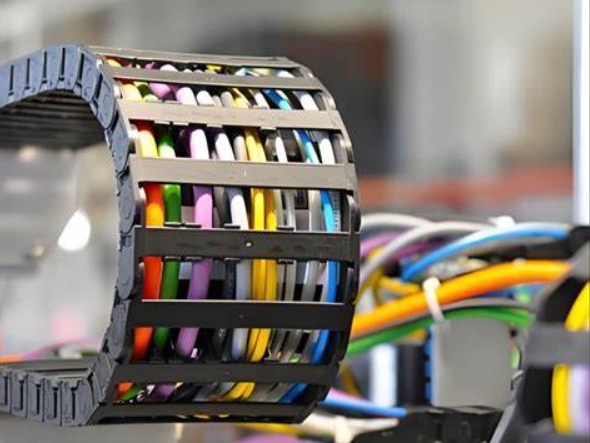
A cable chain is a mechanical guiding and protective system designed to support and route cables, hoses, and media conduits in applications involving continuous dynamic movement. These movements can be horizontal, vertical, circular, or spiral in nature. The cables within the chain transmit power, signals, or data between two points that are in relative motion, often requiring them to bend, rotate, or undergo combined movements.
Cable chains are also commonly referred to as power chains, power guide chains, cable drag chains, or cable carriers.
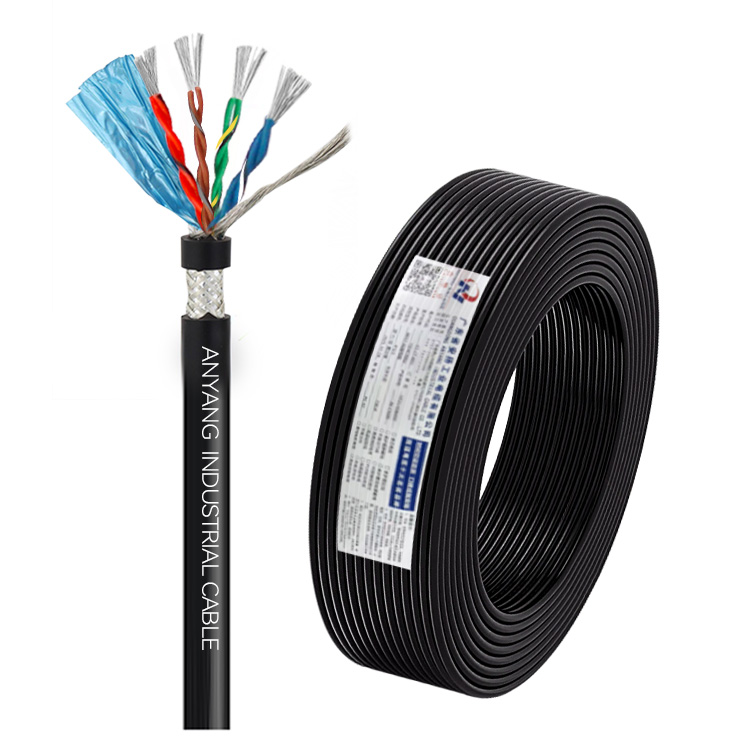
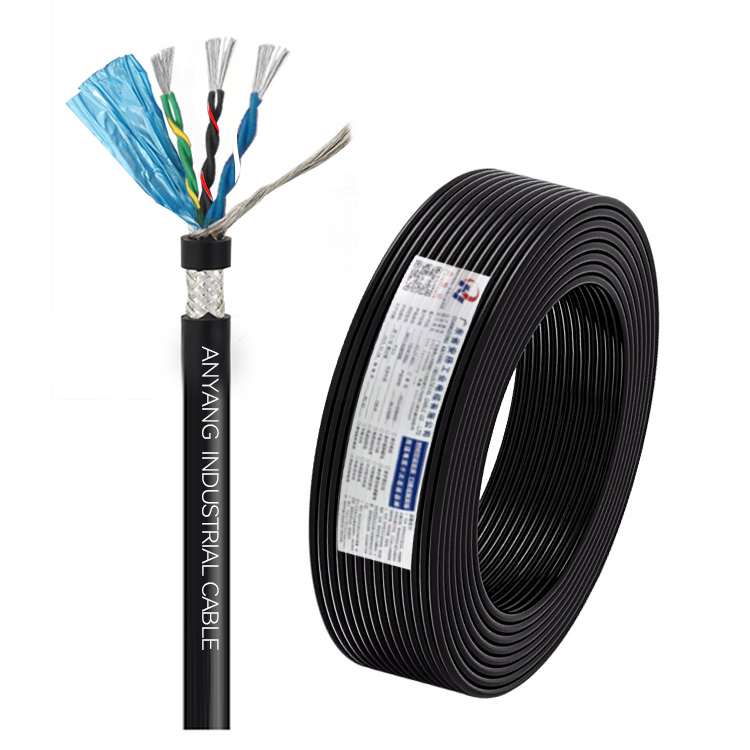
Our drag chain cables are engineered to operate reliably within cable chains over millions of bending cycles in moving machinery. Without this protective guidance, cables would quickly suffer damage and premature failure due to the constant mechanical forces and repetitive motion encountered during operation.
Applications of Drag Chain Cables
Drag chain cables are primarily used within cable carriers to ensure reliable performance in applications that demand precise cable movement, organization, and positioning. Typical examples include filling systems, laser cutters, machine tools, robotic handling units, CNC equipment, and press machinery. Beyond industrial settings, they are also employed in theater and stage installations where controlled movement and durable cabling are required.
Additional applications outside cable chains include:
Moving machine parts such as robotic arms and handling devices
Connecting closely spaced equipment where tight bending or kinking may occur
High-vibration environments, where extra‑fine‑stranded conductors offer greater fatigue resistance
Space‑constrained installations, as drag chain cables are more flexible and easier to route than standard fixed cables
Wind turbine loops subject to slow, continuous rotational movement
These cables are engineered to withstand repeated bending, twisting, and mechanical stress—ensuring long‑term reliability even in demanding dynamic applications.
Essential Properties of Drag Chain Cables
To be suitable for use in cable carriers, cables must meet several critical performance criteria:
Conductor Flexibility: Typically feature extra‑fine‑wire (Class 6) or fine‑wire (Class 5) stranded conductors to maximize movement capability and fatigue resistance.
Bending Performance: Designed with a small minimum bending radius (often specified as a multiple of the cable diameter, e.g., 10× OD). The cable must maintain functionality when continuously flexed to this radius, which must align with the bending radius of the cable carrier system.
Compact Outer Diameter: Optimized for space efficiency. Multi‑conductor variants generally contain no more than 25 conductors; for higher conductor counts or larger cross‑sections, single‑conductor cables (SC) are often recommended to save space and weight.
Stranding Lay Length: Shorter lay lengths increase cable flexibility. The stranding pitch is carefully selected based on the required degree of movement.
Low Weight: Lightweight construction reduces the load the cable chain must support, accelerate, and decelerate over its travel length.
Material Selection: Jacket and insulation materials are chosen to meet both the dynamic demands of the cable carrier and the specific environmental conditions (e.g., oil, temperature, abrasion, chemicals) of the application.
These characteristics ensure reliable, long‑term performance in high‑cycle dynamic applications where continuous flexing, space constraints, and mechanical stress are critical factors.
Impact of Cable Properties on Application Suitability
Before selecting a cable chain model, it is essential to clarify the specifications of all intended cable types.
The properties described previously significantly influence the following application parameters, which must be carefully considered during cable selection:
Bending Radius Compatibility – The cable’s minimum bending radius must match or exceed that of the cable chain to prevent premature conductor fatigue or insulation damage.
Cycle Life & Durability – Conductor stranding, jacket material, and overall flexibility determine how many flex cycles the cable can withstand before failure.
Space & Weight Constraints – Compact diameter and lightweight design reduce mechanical load on the chain, allowing longer travel distances and higher acceleration without excess wear.
Environmental Resistance – Material selection (e.g., PUR, PVC, TPE) dictates suitability for conditions involving oils, chemicals, temperature extremes, or abrasion.
Electrical Performance – Shielding, capacitance, and voltage rating must be maintained throughout dynamic movement to ensure signal integrity and power transmission.
Optimal alignment between the drag chain cable and the operating environment is critical. Only by matching cable properties to the specific mechanical, electrical, and environmental conditions can excessive wear be minimized and a long, reliable service life achieved.
 telephone
 Contact US